Applications

How UVC Is Applied Across Real-World Environments

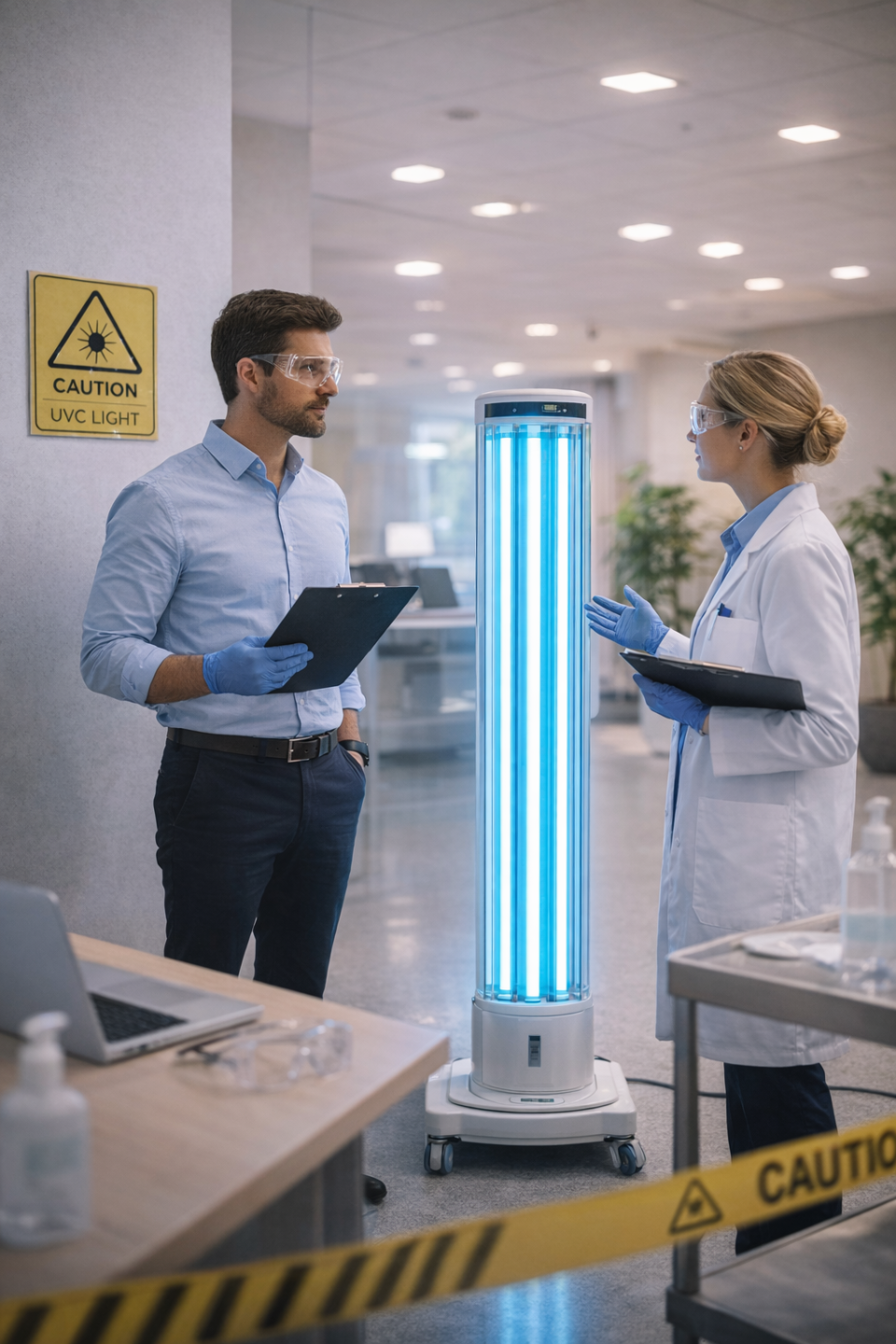
Ultraviolet-C technology delivers value only when applied with a clear understanding of environmental context, operational patterns, and safety parameters. Responsible deployment does not follow a single model; what may be appropriate in one setting can be unsuitable in another.

The Applications section of UVC Today Institute examines how UVC is being evaluated and implemented across a range of real-world environments. Each application area reflects distinct operational conditions, risk considerations, and expectations related to safety, standards, and performance.

This section is designed to provide context before conclusions—helping organizations and professionals understand where UVC may be appropriate, how it is integrated, and what factors influence responsible use.
Healthcare & Laboratories

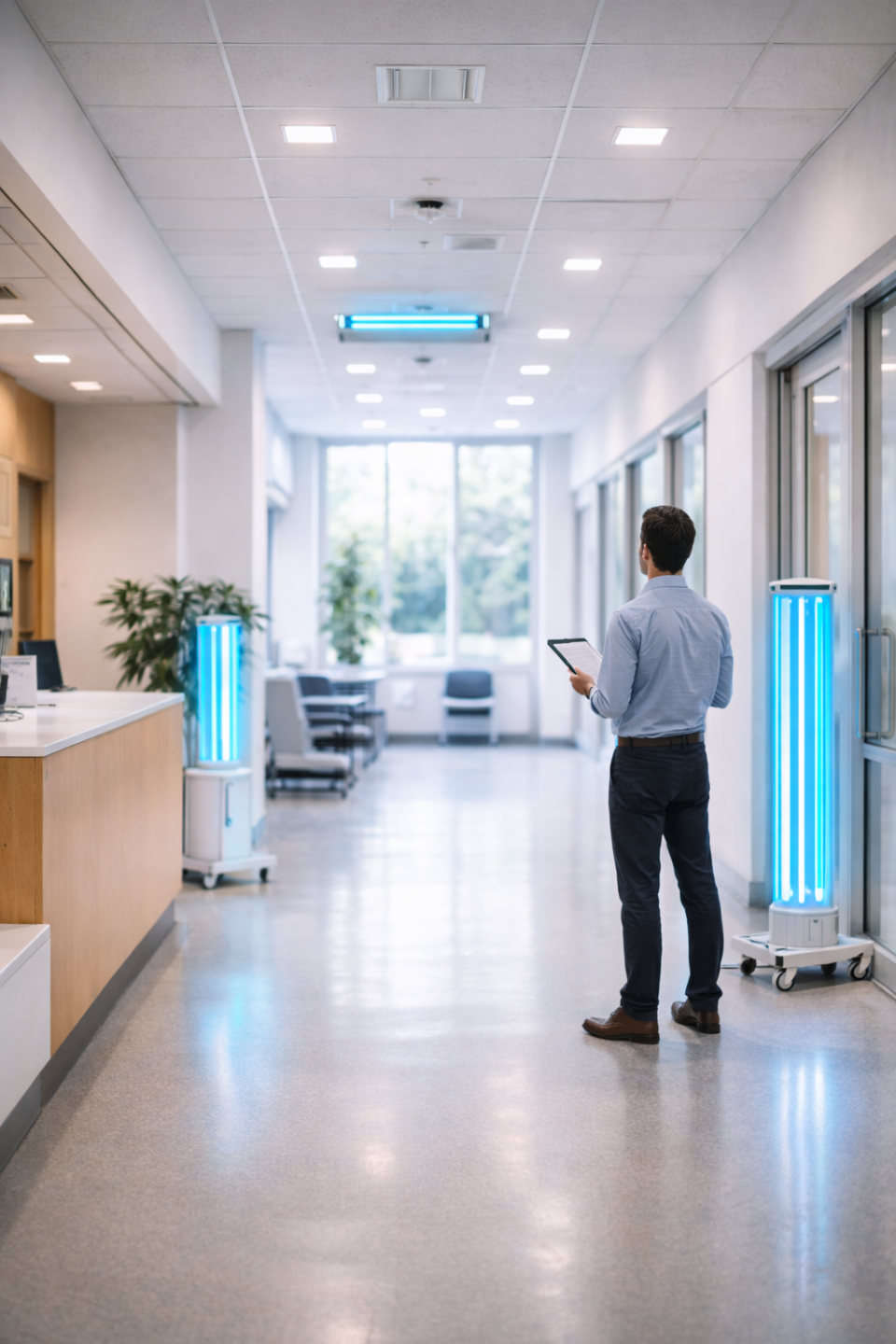
Healthcare facilities and laboratory environments operate under strict clinical and operational protocols where precision, consistency, and safety are essential. Within these settings, UVC technologies are typically evaluated as part of broader infection-control and environmental hygiene strategies.

Applications must function within tightly controlled conditions, supported by validated system design, defined exposure parameters, and disciplined operational procedures. Because these environments involve vulnerable populations and sensitive research activity, reliability and safety governance are critical.

Responsible UVC deployment in healthcare and laboratory settings depends on careful integration with established protocols, ensuring that technology supports infection-control objectives without compromising patient, staff, or research safety.

Explore

Gyms & Fitness Studios

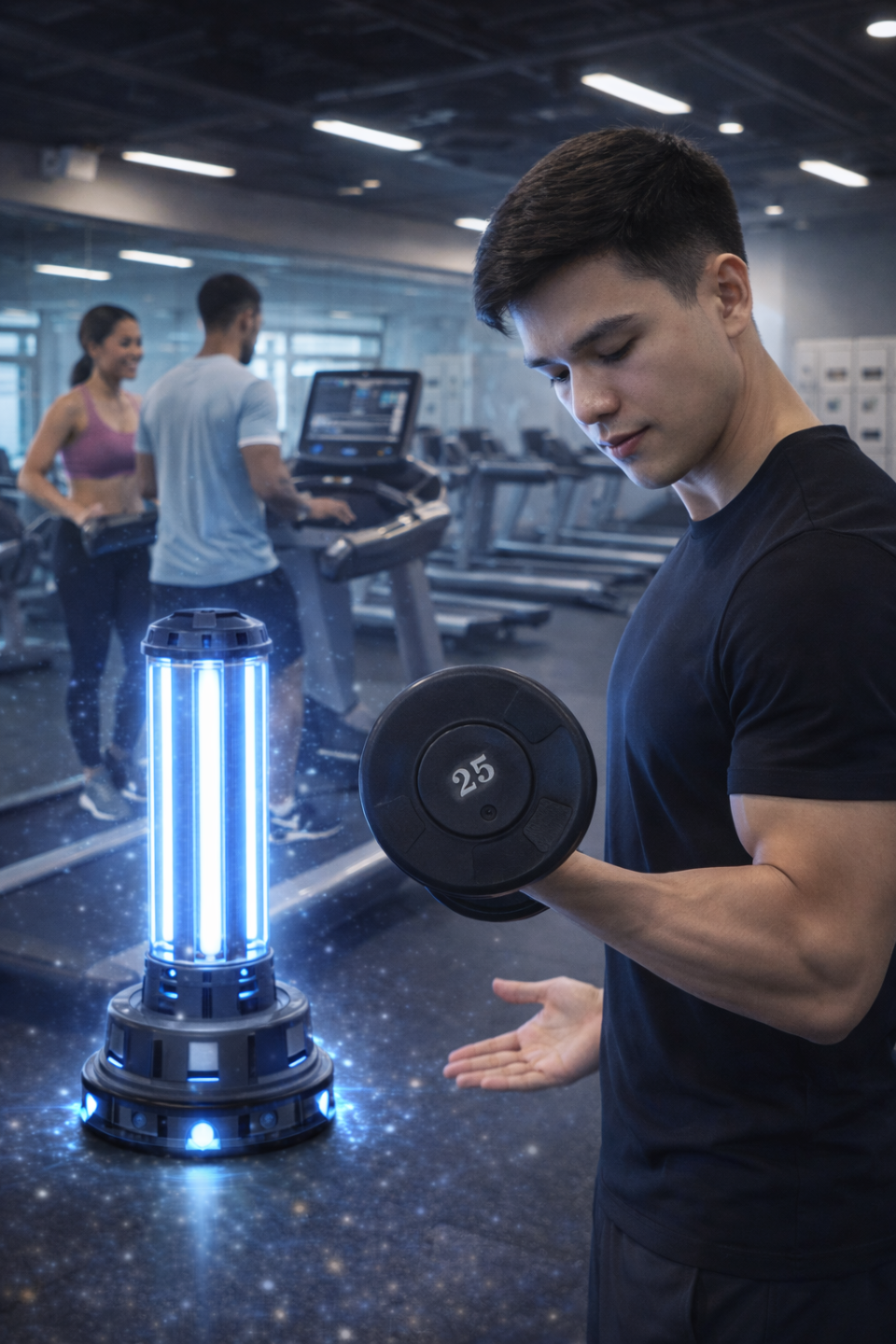
Gyms and fitness studios are high-activity environments characterized by constant movement, shared air circulation, and frequent surface interaction. Maintaining hygienic conditions in these spaces requires approaches that support cleanliness without disrupting normal operations or occupant comfort.

In such environments, UVC technologies are typically considered for indirect or controlled applications, often integrated in ways that operate alongside existing ventilation, cleaning, or facility management practices. Careful system design, placement, and operational controls are essential to ensure that safety boundaries are maintained.

Responsible use in fitness environments depends on unobtrusive integration—supporting healthier conditions while preserving the performance, accessibility, and user experience expected in active public spaces.

Explore

Hospitality & Rentals

Hospitality environments depend on trust, comfort, and consistent operational standards. In hotels, short-term rentals, and guest accommodations, hygiene practices must support both safety expectations and the overall guest experience.

Within these settings, UVC technologies are often considered for behind-the-scenes applications, integrated into building systems, air treatment strategies, or structured cleaning workflows. Implementation requires careful coordination with facility operations to ensure that hygiene objectives are supported without disrupting normal guest activity.

Responsible deployment in hospitality environments emphasizes reliability, discretion, and operational compatibility—enhancing sanitation practices while maintaining the comfort and confidence expected by guests.

Explore

Commercial Buildings

Commercial buildings support a wide range of daily activities and occupancy patterns, from office environments and shared workspaces to retail and mixed-use facilities. Maintaining healthy indoor conditions in these spaces requires approaches that align with building operations, infrastructure, and occupant safety.

In these environments, UVC technologies are most often considered for integration within building systems—particularly ventilation, air-handling units, and environmental treatment strategies. Proper system design and operational controls are essential to ensure that implementation supports indoor air quality objectives without disrupting tenant activity or routine building operations.

Responsible deployment within commercial buildings depends on coordination with facility management practices, infrastructure capabilities, and safety guidance, ensuring that technology enhances environmental conditions while maintaining reliability and occupant confidence.

Explore

Residential Environments

Residential settings require heightened caution due to continuous occupancy and close human proximity. Homes and multi-unit residential buildings present conditions where safety considerations must take priority over convenience or perceived technological benefit.

In these environments, UVC technologies—when considered—are typically limited to controlled or indirect applications designed to operate within defined safety parameters. Clear guidance, proper system design, and realistic expectations are essential to ensure that use does not introduce unnecessary risk.

Responsible evaluation in residential environments emphasizes occupant protection, informed decision-making, and careful alignment with safety standards before any deployment is considered.

Explore

Context Defines Application

Across all environments, a consistent principle applies: the effectiveness and suitability of ultraviolet-C technology are determined by context. Factors such as environmental design, occupancy patterns, operational discipline, and safety controls ultimately shape whether UVC can be applied responsibly.

Successful implementation depends not only on the technology itself, but on how it interacts with the conditions of the environment in which it operates. Without alignment between system design and real-world context, even well-intended applications may fail to meet safety or performance expectations.

For this reason, responsible evaluation is not simply about identifying where UVC can be used—it is about determining where its use is appropriate, justified, and properly governed.