SAFETY & COMPLIANCE
Protecting People Through Discipline, Standards, and Design
UVC technology is effective because it is biologically active. That same characteristic makes safety and compliance central to any responsible use of UVC.
Safety & Compliance exists to explain the principles that govern how UVC should be designed, deployed, and operated β not as optional considerations, but as foundational requirements. This page provides a structured understanding of exposure limits, regulatory frameworks, and risk-mitigation practices that protect people while allowing UVC to be used responsibly.
THE ROLE OF SAFETY IN UVC TECHNOLOGY
UVC does not operate in isolation. It interacts with people, materials, air, water, and built environments.
Without clear safety boundaries, UVC can cause harm. With proper controls and discipline, it can be applied effectively while minimizing risk. Safety in UVC is not achieved through a single measure, but through layered protection that combines engineering, standards, and operational behavior.
Responsible UVC use begins with acknowledging that risk exists β and managing it deliberately.
EXPOSURE LIMITS
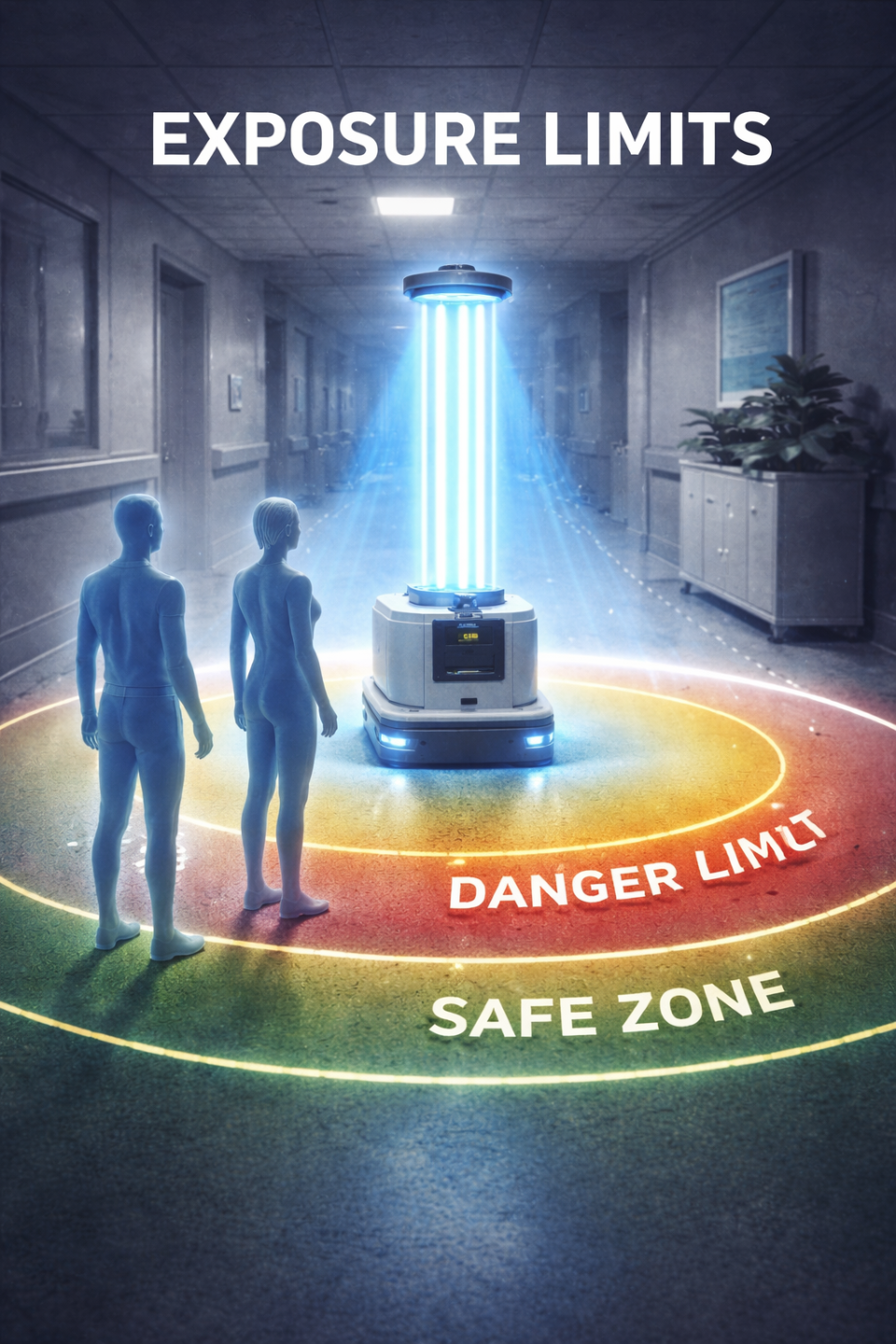
Exposure limits define how much UVC radiation people can be exposed to without unacceptable risk. These limits exist to protect skin, eyes, and long-term health.
Exposure thresholds are based on scientific research and are expressed as maximum allowable doses over defined periods of time. They are not targets to approach, but boundaries that must not be exceeded.
Understanding exposure limits is essential for system design. Distance, intensity, duration, and shielding all influence whether exposure remains within acceptable bounds. In occupied environments, systems must be designed so that exposure limits are never approached during normal operation.
Exposure limits are a safeguard β not a suggestion.
WHY LIMITS MUST BE RESPECTED
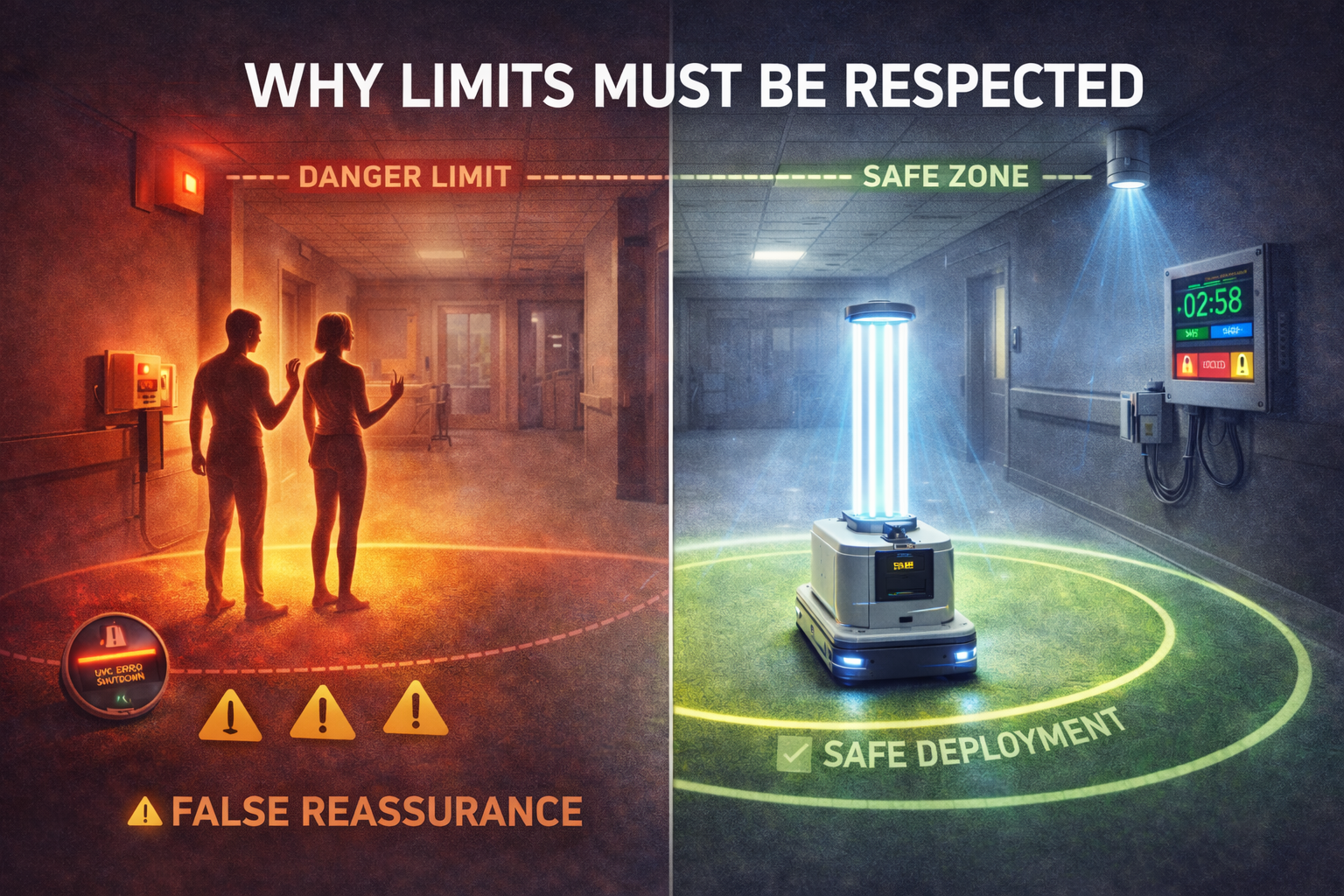
Ignoring or misunderstanding exposure limits leads to two common failures: unsafe deployment or false reassurance.
Unsafe deployment puts people at risk. False reassurance undermines trust in the technology and in those responsible for its use. Respecting exposure limits protects both human safety and the credibility of UVC as a legitimate tool.
Compliance begins with understanding these limits and designing systems that remain comfortably within them.
STANDARDS & REGULATORY FRAMEWORKS
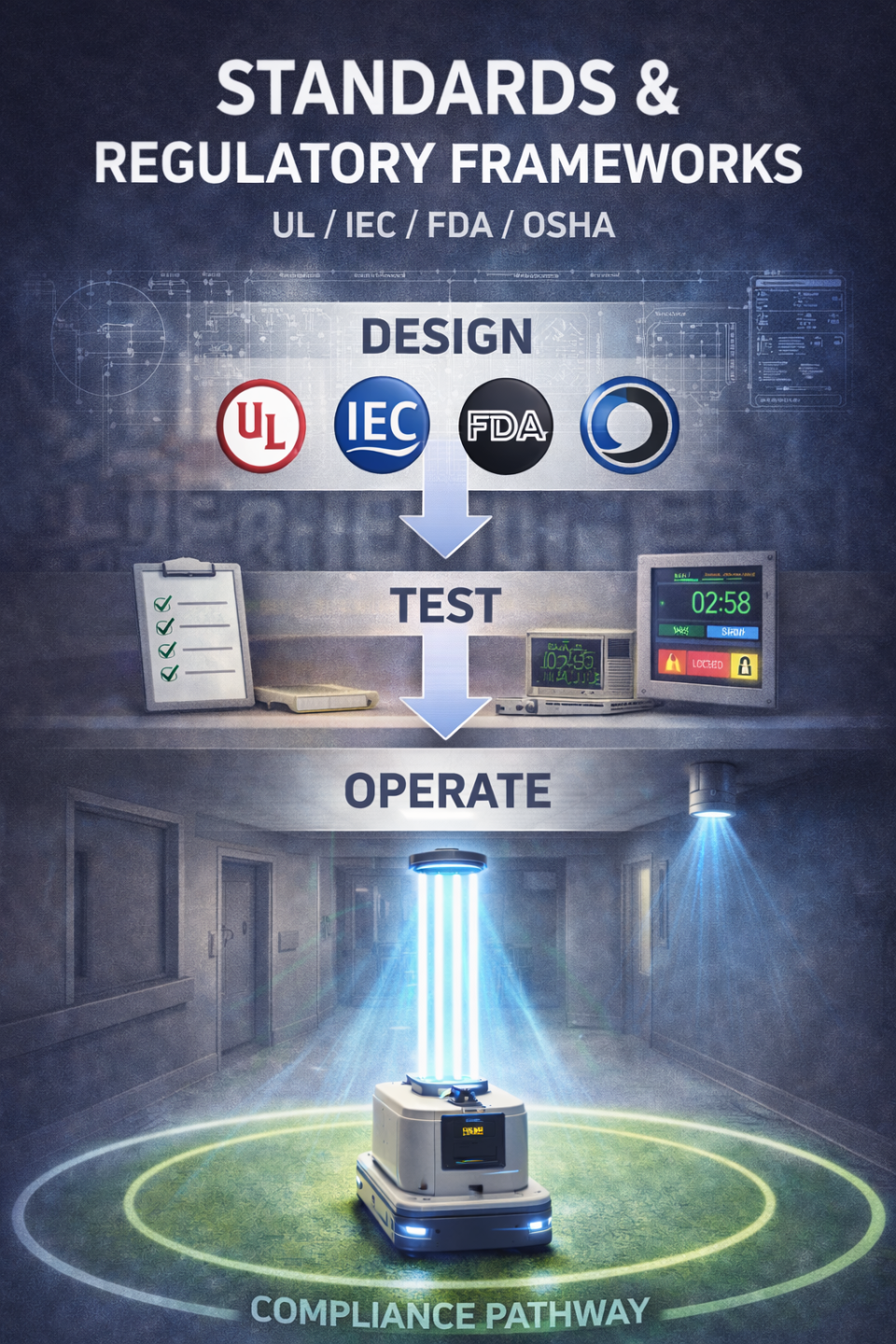
UL / IEC / FDA / OSHA
Multiple organizations contribute to the safety and governance of UVC technology. Each plays a distinct role in defining expectations for design, testing, and use.
Some bodies focus on electrical and mechanical safety, others on product performance, occupational exposure, or public health guidance. Together, they form a framework that helps ensure UVC systems are built and operated responsibly.
Compliance does not mean that a system is βapproved for all uses.β It means that aspects of design, construction, testing, or operation align with recognized requirements and guidance.
Understanding the role of standards bodies helps organizations distinguish responsible products and practices from unsupported claims.
SHIELDING & RISK MITIGATION
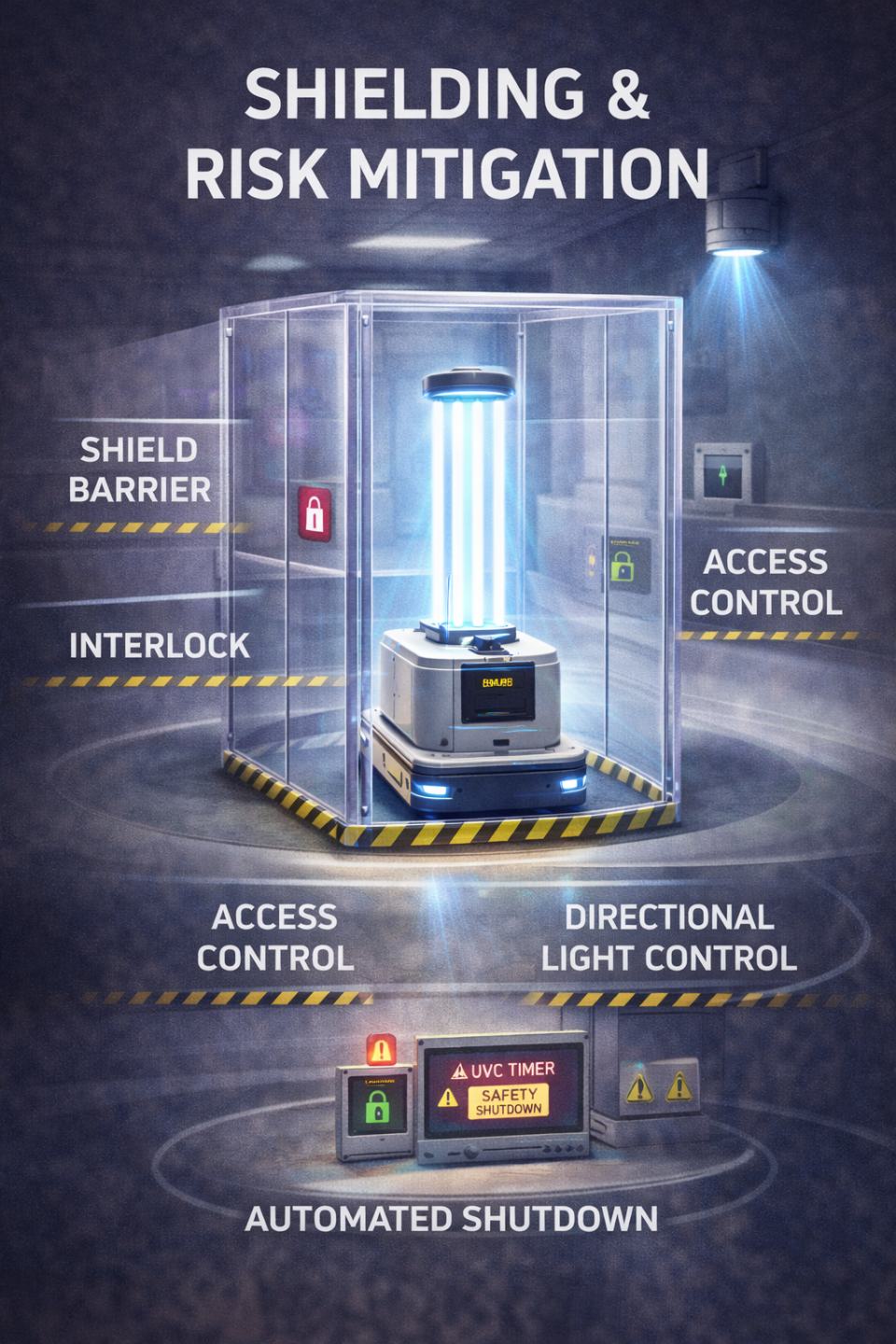
Risk mitigation in UVC systems relies on layered protection. Shielding and control mechanisms are designed to prevent unintended exposure and reduce the likelihood of human error.
Shielding may involve physical barriers, enclosures, or directional control of light. Risk mitigation may also include interlocks, timers, sensors, alarms, access controls, and automated shutdown mechanisms.
These measures are not redundancies β they are necessities. No single safeguard is sufficient on its own.
Effective mitigation assumes that systems can fail or be misused, and designs accordingly.
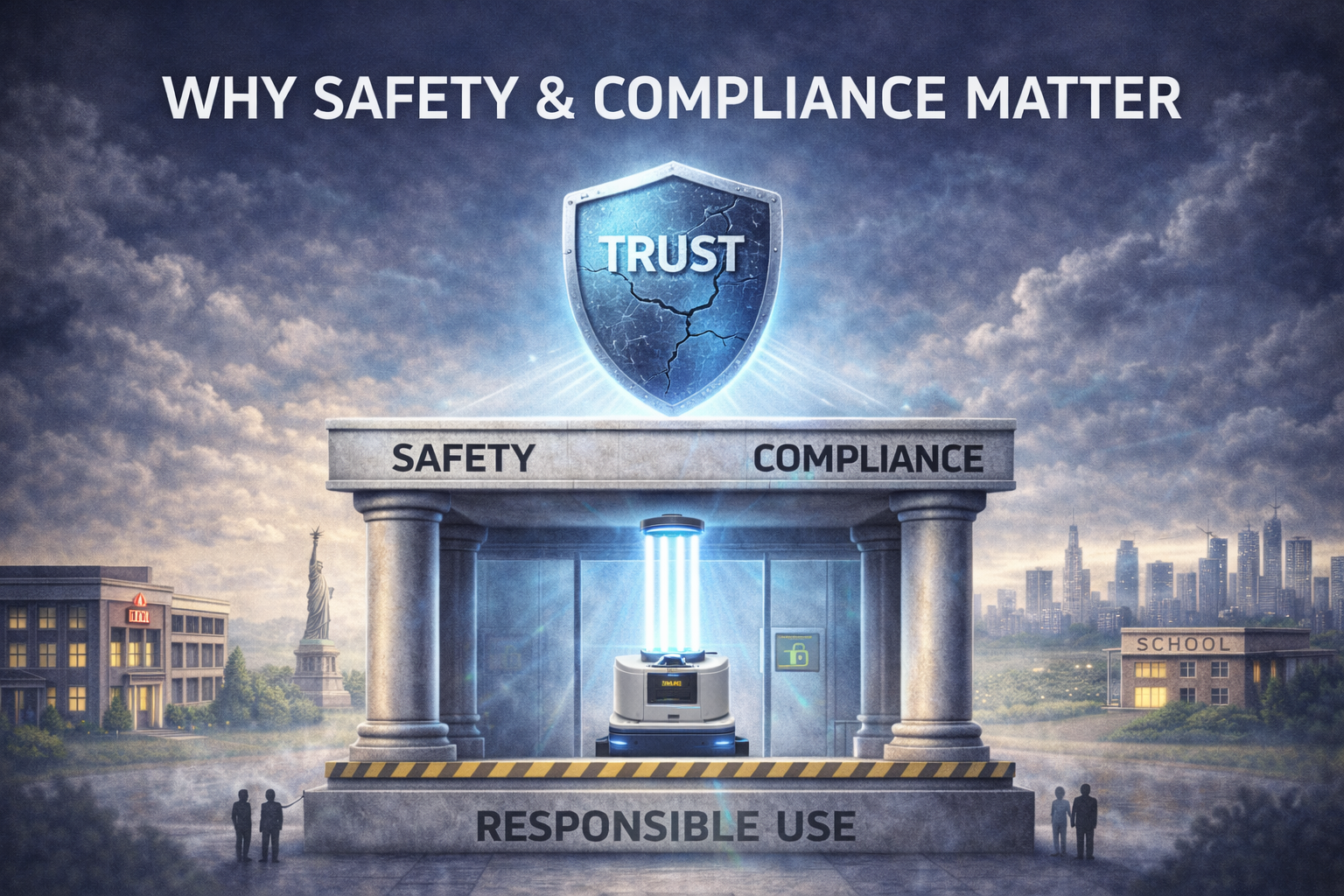
WHY SAFETY & COMPLIANCE MATTER
Safety failures do more than cause harm. They undermine trust in technology, institutions, and decision-makers.
UVC technology can only be adopted sustainably if it is used responsibly. Safety and compliance are what allow UVC to move beyond controlled environments without creating unacceptable risk.
This page exists to reinforce that responsibility is not a limitation β it is the condition that makes UVC viable.
WHY PRODUCT TYPE KNOWLEDGE MATTERS
Misunderstanding product types can lead to incorrect expectations, improper installation, or unsafe use.
Product Types exists to provide clarity at the technology level β ensuring that discussions around applications, standards, and deployment are grounded in accurate understanding.
Β
UVC Today β Product Types
Understanding technology before application.
Clarity before choice.