PRODUCT TYPES 

Understanding the Technologies Behind UVC Applications

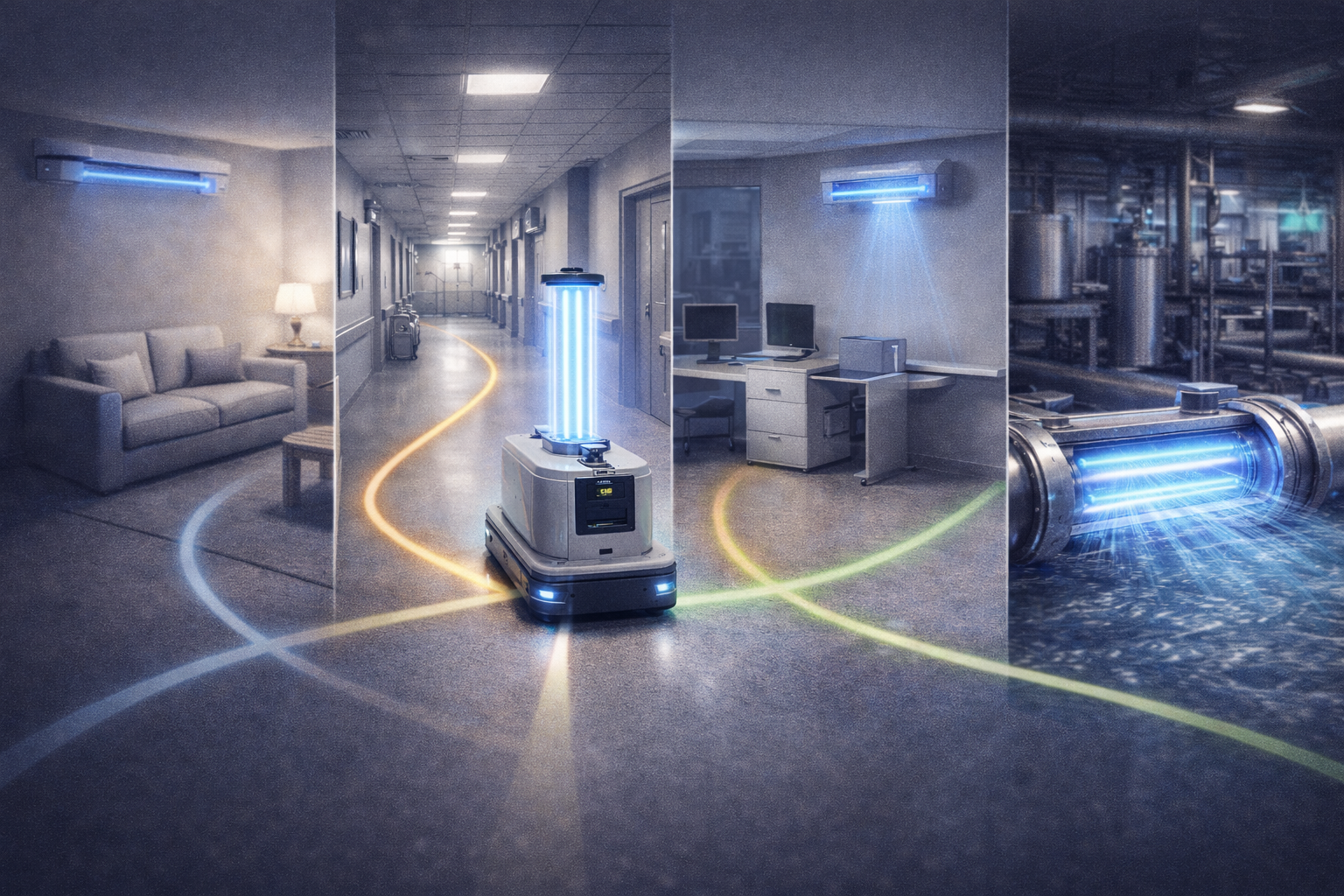
UVC technology is not delivered through a single type of system. It is implemented through a range of product categories, each designed to address specific environments, risks, and operational constraints.

Product Types exists to explain these categories clearly — not to promote individual products, but to help readers understand how different UVC technologies function, where they are typically applied, and what considerations shape their use.

This page provides a technology-level overview before application-specific decisions are made.


AIR STERILIZATION

Air sterilization systems use UVC to reduce microbial presence in moving air. These systems are commonly integrated into ventilation or air-handling infrastructure, where air passes through a controlled exposure zone.

Because air is constantly in motion, effectiveness depends on airflow rate, exposure time, and system placement. Proper design ensures that sufficient UVC energy is delivered while preventing direct human exposure.

Air-focused systems are often considered in environments where airborne transmission is a concern, and where centralized air systems allow for controlled implementation.

Air sterilization is not about treating a room uniformly. It is about treating air as it moves through a system.

SURFACE DISINFECTION

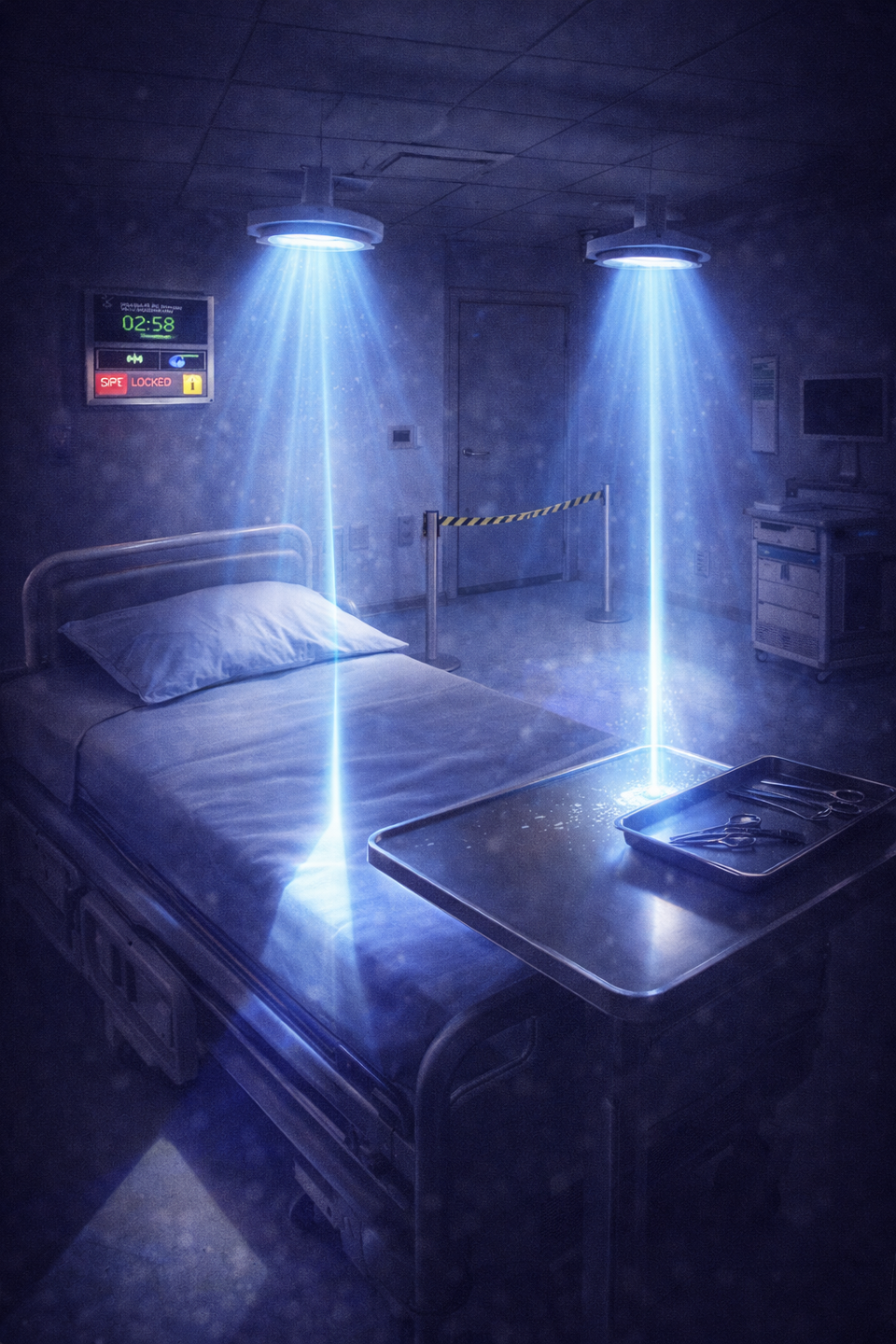
Surface disinfection systems apply UVC to reduce microbial presence on exposed surfaces. These systems may be fixed in place or designed for controlled operation during unoccupied periods.

Surface geometry, material type, distance, and shadowing significantly influence effectiveness. UVC light does not bend around objects, so areas not directly exposed may receive little or no treatment.

For this reason, surface disinfection requires careful planning and is often used as a supplementary measure rather than a standalone solution.

Timing and access control are critical to ensuring safety in surface-focused applications.

WATER PURIFICATION

UVC has a long history of use in water purification. In this context, UVC is applied within enclosed systems where water flows past a controlled light source.

Water treatment applications benefit from containment, predictable flow rates, and well-established validation methods. These systems are used to reduce microbial contamination without introducing chemical additives.

Effectiveness depends on water clarity, flow rate, exposure time, and system maintenance. Unlike air or surface applications, water purification systems are typically isolated from direct human exposure.

This category represents one of the most mature and standardized uses of UVC technology.


ROBOTICS

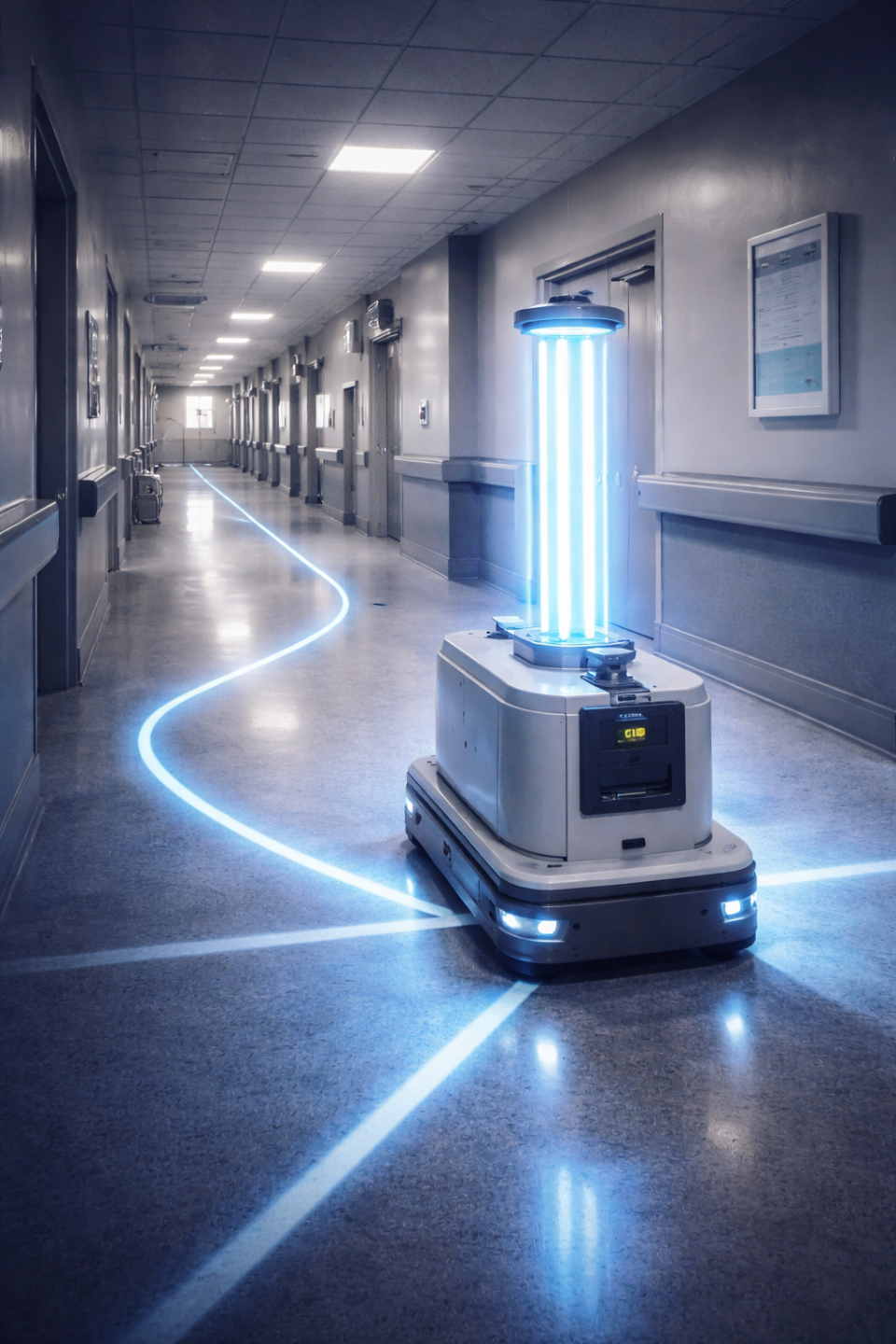
Robotic UVC systems are designed to move within environments to deliver controlled exposure to targeted areas. These systems are often used in large or complex spaces where fixed installations may be impractical.

Robotic systems operate under strict control protocols, typically during unoccupied periods. Navigation, positioning, and safety interlocks are critical to preventing unintended exposure.

While robotics can increase coverage, they also introduce complexity. Effective use depends on proper programming, supervision, and validation.

Robotic UVC systems emphasize automation, not autonomy.

SENSORS & CONTROLS

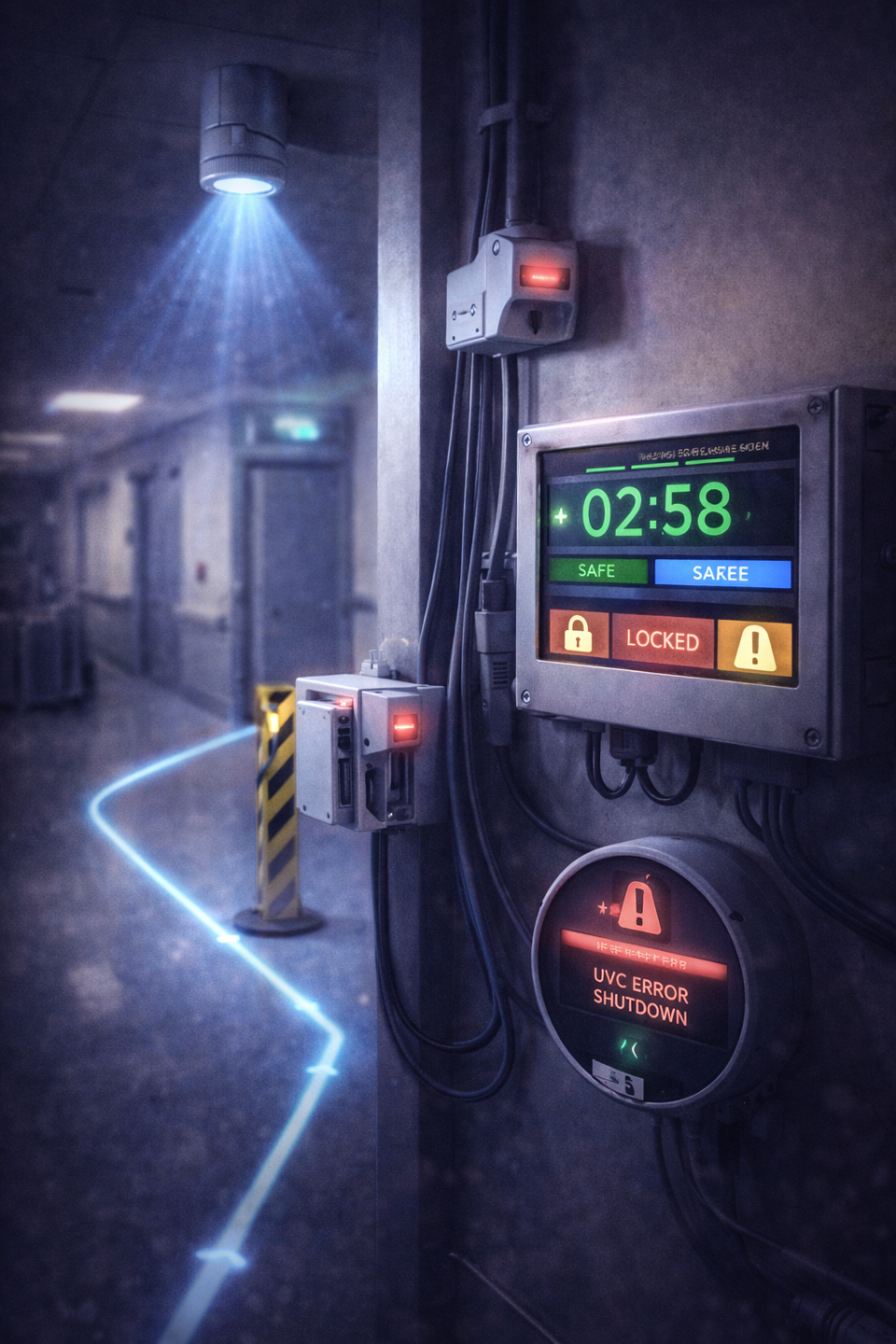
Sensors and control systems are essential components of responsible UVC deployment. They do not deliver UVC themselves, but they govern how and when UVC systems operate.

These technologies may include occupancy detection, timers, interlocks, monitoring devices, and automated shutdown mechanisms. Their purpose is to prevent unsafe exposure and ensure systems function only under approved conditions.

Controls transform UVC from a static technology into a managed system. Without them, even well-designed hardware can pose risk.

Sensors and controls are not optional accessories. They are foundational to safety and accountability.

UNDERSTANDING PRODUCT CATEGORIES IN CONTEXT

Each product type serves a different purpose and carries different requirements. No single category is universally appropriate, and combining technologies does not guarantee effectiveness.

Choosing the right product type depends on environment, occupancy, operational needs, and safety considerations. Understanding these categories allows for informed evaluation before moving into application-specific planning.

WHY PRODUCT TYPE KNOWLEDGE MATTERS

Misunderstanding product types can lead to incorrect expectations, improper installation, or unsafe use.

Product Types exists to provide clarity at the technology level — ensuring that discussions around applications, standards, and deployment are grounded in accurate understanding.


UVC Today — Product Types
Understanding technology before application.
Clarity before choice.